

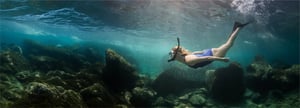
When you snorkel in the Galapagos, you don’t have to search far for wildlife. Much of the action happens close to the surface, which means you can experience extraordinary encounters without advanced diving experience.
Why snorkeling in the Galapagos feels different.
You may swim near sea lions, reef sharks, rays, sea turtles, penguins, and schools of tropical fish in a single outing. Instead of colorful coral reefs, the Galapagos offers something more rare: dense wildlife interaction in a protected volcanic ecosystem.
How ocean currents shape your experience
Your snorkeling conditions depend heavily on the ocean currents that meet around the islands.
The Humboldt Current brings cooler, nutrient-rich water. The Panama Current brings warmer conditions. The Cromwell Current upwelling feeds the western islands, especially Isabela and Fernandina, creating some of the archipelago's richest marine encounters
You may also feel thermoclines, sudden temperature changes underwater. They are normal in the Galapagos and part of what makes the marine world so dynamic.
The two faces of Galapagos: choosing your ideal season
You can snorkel in the Galapagos year-round. The best season depends on what you want most from the experience.
|
Season |
Months |
Water Temp |
Visibility |
|
Warm season |
Dec-May |
~75°F–82°F (24°C–28°C) |
High, ~60–100 ft (18–30 m) |
|
Cool season |
Jun-Nov |
~64°F–72°F (18°C–22°C) |
Medium, ~30–60 ft (9–18 m) |
Even in the warm season, some western sites can feel cooler because of deep-water currents and thermoclines.
Galapagos water temperature
Water temperature is one of the most common questions travelers ask before booking. Here is what you can typically expect throughout the year.
-
Choose December to May if you want warmer water: You’ll usually find calmer seas, brighter visibility, and more comfortable conditions. This season works especially well if you are snorkeling for the first time, traveling with family, or prefer longer water sessions.
-
Choose June to November if you want richer marine activity: You’ll feel cooler water, but you may also see more active marine ecosystems. Nutrient-rich currents bring plankton, which feed the food chain and attract larger marine life.
-
Choose May, June, November, or December for balance: These shoulder months can offer a strong mix of pleasant conditions, active wildlife, and fewer extremes.
Galapagos visibility conditions
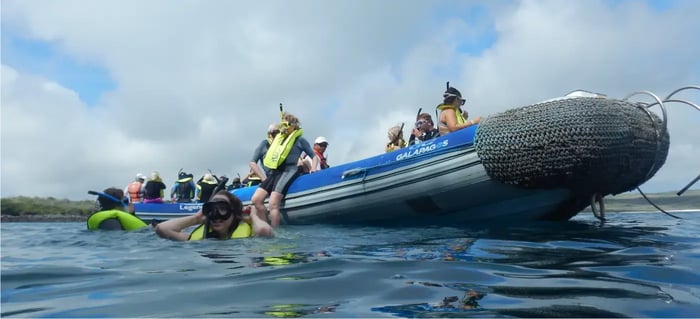
Your visibility changes depending on currents, plankton, weather, and the specific site you're visiting.
From January through May, water conditions are often clearer and brighter, with visibility reaching approximately 60–100 ft (18–30 m) in some areas. During June through November, visibility may occasionally decrease to around 30–60 ft (9–18 m) as cooler nutrient-rich currents bring more plankton into the water.
But in the Galapagos, lower visibility does not necessarily mean a lesser experience. Those nutrient-rich waters are exactly what support the extraordinary marine life that makes snorkeling here so unforgettable.
For a full month-by-month breakdown of Galapagos weather, wildlife, and cruise conditions, see our Month-by-month guide for 2026 >
Marine life calendar 2026: what you can expect underwater
The Galapagos changes throughout the year, but a few marine encounters consistently define the experience. Depending on the season, ocean conditions, and itinerary, you may snorkel near sea lions, marine iguanas, penguins, sea turtles, rays, reef sharks, colorful fish, and large schools moving through volcanic waters.
The marine icons of the Galapagos Reserve
|
Marine icon |
Best time to see them |
What makes them special |
|
Galapagos sea lions |
Year-round; especially playful during warmer months |
Curious, energetic, and often the most interactive wildlife encounter for snorkelers. |
|
Marine iguanas |
Year-round; most active feeding during cooler months |
The only marine iguanas in the world are often seen feeding underwater along volcanic shores. |
|
Galapagos penguins |
Year-round; especially active in cooler western waters |
The only penguins found north of the equator are fast and incredibly agile underwater. |
|
Pacific green sea turtles |
Year-round; nesting activity stronger during warmer months |
Calm, graceful swimmers are frequently seen gliding near reefs and rocky bottoms. |
|
Reef sharks |
Year-round; juvenile hammerheads occasionally appear seasonally |
Commonly seen resting below snorkelers or cruising calmly through channels and reefs. |
Larger shark encounters—such as schooling hammerheads or whale sharks—are usually associated with deeper, more advanced dive areas like Darwin and Wolf. During regular snorkeling excursions, you’re more likely to spot whitetip reef sharks resting near the bottom, reef sharks cruising calmly through channels, or, on rare occasions, juvenile hammerheads in certain sites and seasons.
Seasonal wildlife highlights
From December to May, warmer water, calmer seas, and brighter visibility make snorkeling especially comfortable for families and first-time snorkelers. This is a great season for sea turtles, tropical fish, rays, and playful sea lions. During warmer months, some travelers may also feel brief, mild stings from tiny jellyfish or plankton; wearing a wetsuit or long-sleeved swim protection can help reduce skin exposure.
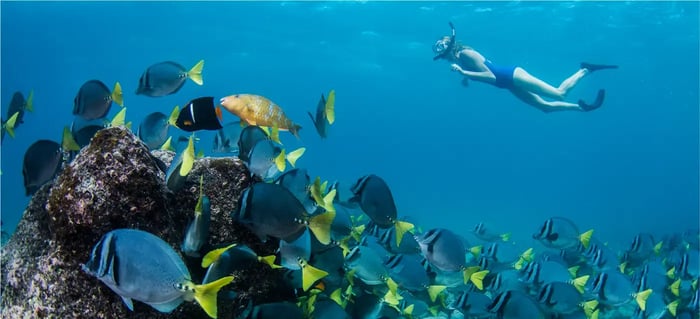
From June to November, cooler, nutrient-rich waters bring more active marine behavior. Visibility may be lower at times, but western itineraries around Isabela and Fernandina can feel especially alive with penguins, marine iguanas feeding underwater, reef sharks, and larger fish concentrations.
These encounters are never guaranteed—this is wild nature—but that unpredictability is exactly what makes snorkeling in the Galapagos so unforgettable. Your experience also depends on the route: choosing the right Galapagos snorkeling itinerary can shape what you see just as much as the season.
Top snorkeling sites in the Galapagos for 2026
-
Devil’s Crown — Floreana Island:
You’ll snorkel around a partially submerged volcanic cone filled with marine life.
You may see: sea turtles, reef sharks, rays, and large schools of fish.
-
Champion Islet — Floreana Island
You’ll find clear water, sea lions, tropical fish, rays, and active surface wildlife.
-
Punta Vicente Roca — Isabela Island
You’ll experience one of the richest western snorkeling sites, shaped by the Cromwell Current.
You may see: Galapagos penguins, marine iguanas, sea turtles, and rays.
-
Punta Espinoza — Fernandina Island
You’ll have one of the best chances to snorkel with marine iguanas feeding underwater.
You may see: marine iguanas, sea lions, penguins, and flightless cormorants.
-
Bartolome Island
You’ll enjoy one of the most beginner-friendly snorkeling sites, with beautiful scenery near Pinnacle Rock.
You may see: penguins, sea lions, and reef fish.
Gardner Bay — Española Island: You’ll snorkel in a relaxed setting with white-sand beaches and gentle conditions.
You may see: sea lions, rays, and sea turtles.
Punta Pitt Islet — San Cristobal Island: You’ll explore an eastern site with dramatic scenery and active marine life.You may see: sea lions, rays, reef fish, and coastal birdlife nearby.
Kicker Rock — San Cristobal Island:
You’ll snorkel near dramatic volcanic formations rising from the sea.
You may see: hammerheads, eagle rays, sea turtles, and reef sharks. This site is best for confident swimmers.
Galapagos snorkeling safety
Understand currents before you enter: You may find calm water at some sites and stronger movement at others. Listen carefully to your guide’s briefing, stay with your group, and do not fight the current.
Respect the 6-foot rule.
Keep at least 6 ft (2 m) from wildlife. Do not touch, chase, or feed animals. This protects you and helps keep the Galapagos wild.
Use the right gear
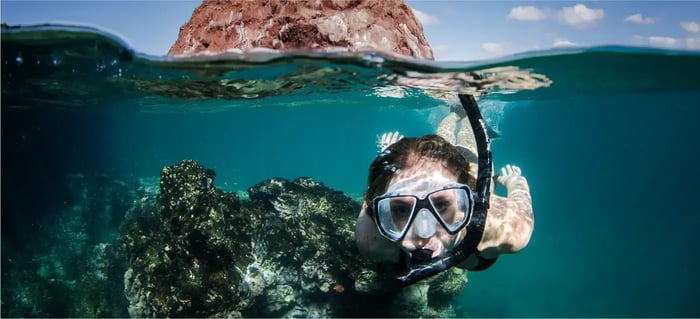
A well-fitting mask and comfortable fins make a big difference. If your mask leaks or your fins feel uncomfortable, tell your guide before entering the water.
Galapagos snorkeling with kids
You can enjoy snorkeling in the Galapagos as a family when you choose the right sites and conditions.
-
Start with calmer sites: Bartolome Island and Gardner Bay are good options if you are traveling with younger snorkelers or beginners.
-
Keep kids comfortable: Children may feel the cold more quickly than adults, especially from June to November. A wetsuit helps them stay in the water longer and enjoy the experience more.
-
Prioritize supervision: Use flotation support when needed, stay close to your guide, and choose activities that match your family’s confidence level.

Planning your 2026 snorkeling adventure
Cruise or land-based adventure?
If snorkeling is a priority, a cruise helps you reach more remote visitor sites, explore multiple islands, and spend less time in transit.
A land-based stay gives you more flexibility in town areas, especially around Santa Cruz and San Cristobal. Santa Cruz also offers access to nearby snorkeling areas such as Las Grietas and Tortuga Bay.
Snorkeling vs. scuba diving
Scuba diving can take you to deeper, advanced sites such as Darwin and Wolf, but snorkeling already gives you extraordinary wildlife encounters near the surface. For most travelers, snorkeling is the easier, more accessible way to experience the Galapagos marine world.
Conservation rules
You’ll be visiting one of the world’s most protected marine environments. Follow the guide instructions, respect marked areas, keep a distance from wildlife, and avoid touching animals at all times.
Ready to explore the underwater world of the Galapagos?
When you snorkel in the Galapagos, you are not just observing the ocean — you are entering one of the world’s last truly wild marine sanctuaries.
You may drift beside a turtle, watch penguins move through volcanic waters, or see marine iguanas feeding below the surface. These are the moments that stay with you long after your journey ends.
Explore the Galapagos through its most extraordinary snorkeling sites — one unforgettable encounter at a time.

COMMENTS